Facebook Story Content Strategy: What to Post, How Often and What to Track
A simple Facebook story strategy for Pages: 8 content types, a posting rhythm, how to study competitors’ stories, and the 6 metrics that matter.

By Ayu Moz
Writer, Facebook Story Viewer
Last updated:
5 min read
A Facebook story content strategy is a simple plan for what your Page posts in stories, how often, and how you measure it. It has 5 parts: a goal, content types, a posting rhythm, competitor research and metrics. Without those, stories turn into random posts that nobody finishes watching.
Here’s how to set up each part without making it complicated.
What should a Facebook story strategy include?
A Facebook story strategy includes 5 parts:
- One goal per month, like getting messages, website visits or event sign-ups.
- 3 to 4 content types you rotate, so you’re never stuck on what to post.
- A posting rhythm you can actually keep up.
- Competitor research, so you know what’s already working in your niche.
- 2 or 3 metrics that tell you if the goal is moving.
Pick the goal first. Everything else follows from it. A bakery that wants more pre-orders posts different stories than a gym that wants trial sign-ups.
What should businesses post in Facebook stories?
Businesses get the best results from content that feels quick and real, not polished ads. These 8 types work for most Pages:
- Product teasers, like a 3 second clip of a new item before the launch post.
- Behind the scenes, like packing orders or setting up the shop in the morning.
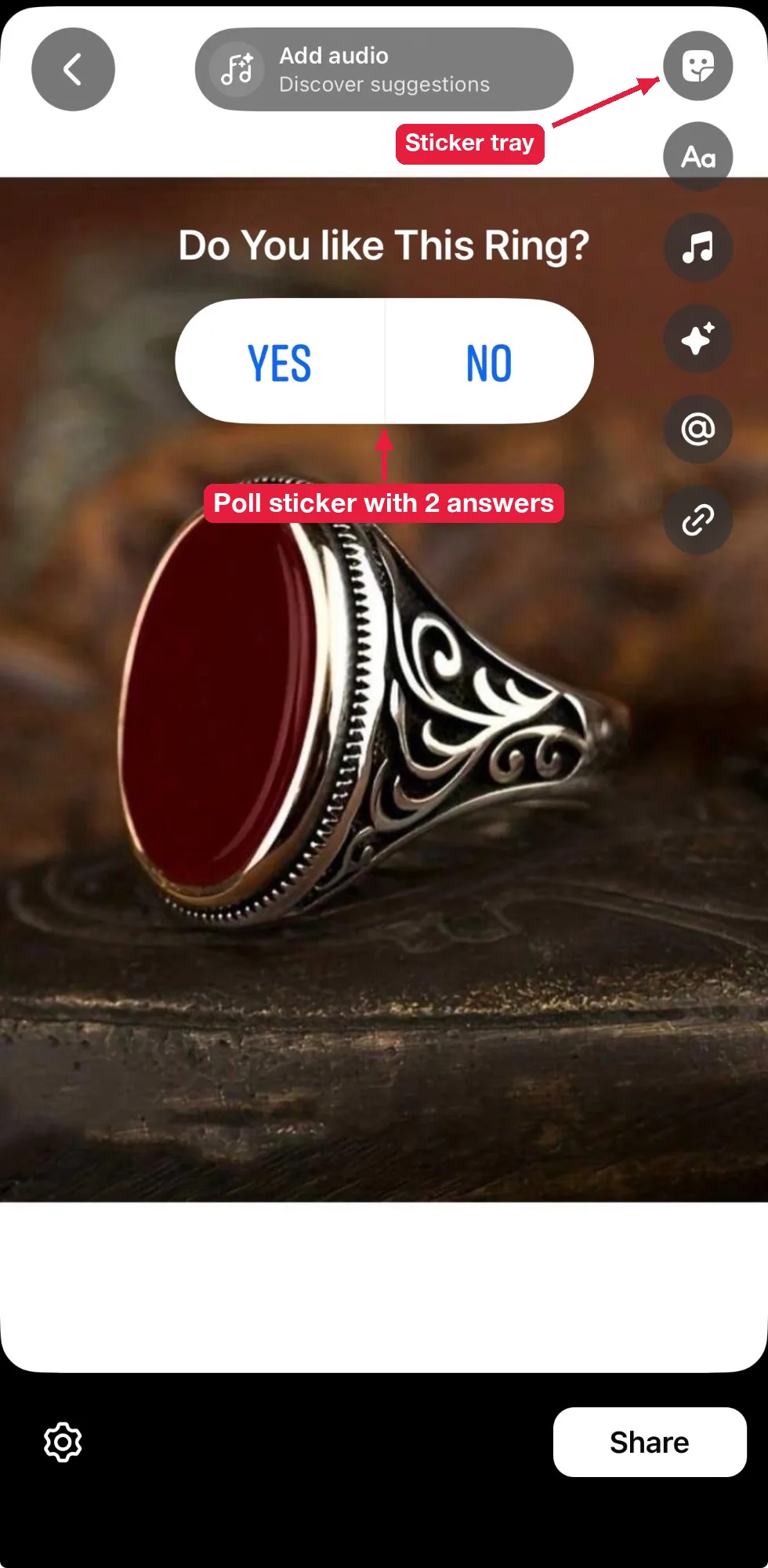
- Polls and questions, like “Which flavor should we bring back?”
- FAQs, one question and answer per story card.
- Customer reviews, shared as a screenshot or a short clip, with permission.
- Limited offers, with a clear end time, since stories only last 24 hours anyway.
- Event countdowns, using the countdown sticker if your account has it.
- Reshared posts, like your latest Reel or blog post, with a line of context.
How often should you post Facebook stories?
Post 3 to 5 days a week, with 2 to 4 story cards each day. That’s enough to stay at the front of your followers’ tray without running out of ideas.
A few rules make each day’s story work harder:
- Put the hook in the first card. If card 1 is boring, people tap past the rest.
- Keep 1 message per card. Short text, big font, one action.
- Post when your followers are online. Your Page insights show the active hours.
- End with an action, like “Reply with your size” or “Tap the link.”
Consistency beats volume. Posting every Tuesday and Friday for 3 months does more than posting 20 stories in one week and then disappearing.
How do you research competitors’ Facebook stories?
You research competitors by watching their public stories every day for 2 weeks and writing down what they post. The problem is that watching from your Page or profile puts your name on their viewer list.
That’s why marketers use Facebook Story Viewer. Paste a competitor’s Page link, and you see their live public stories without appearing on their list. You can also save examples for your swipe file.
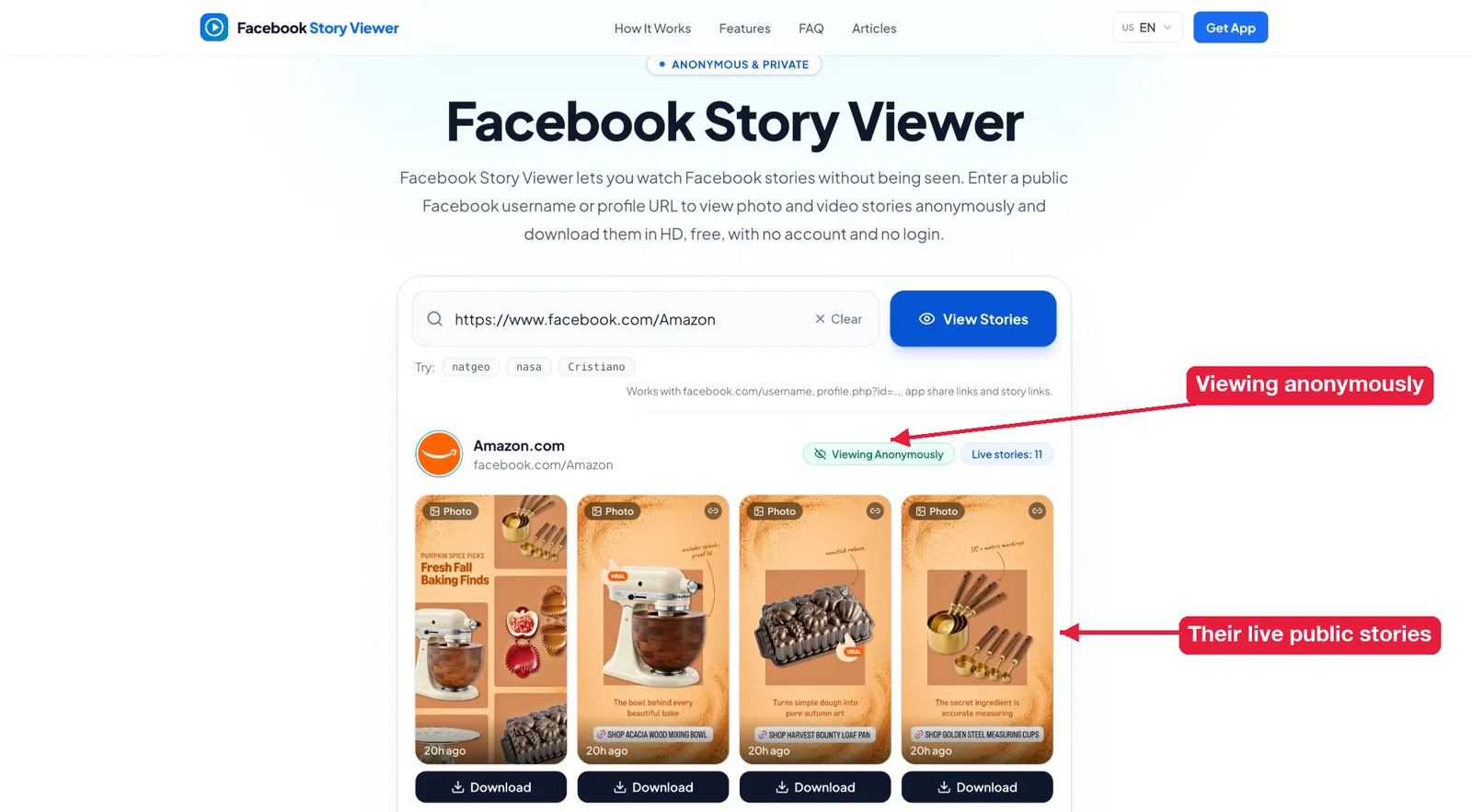
Track 4 things in a simple spreadsheet: how many cards they post per day, which content types they use, which offers they run, and which stickers they use. After 2 weeks, the patterns are obvious.
For paid stories, check the Meta Ad Library. Search their Page name to see every active ad, including the vertical ads made for stories.
Which Facebook story metrics should you track?
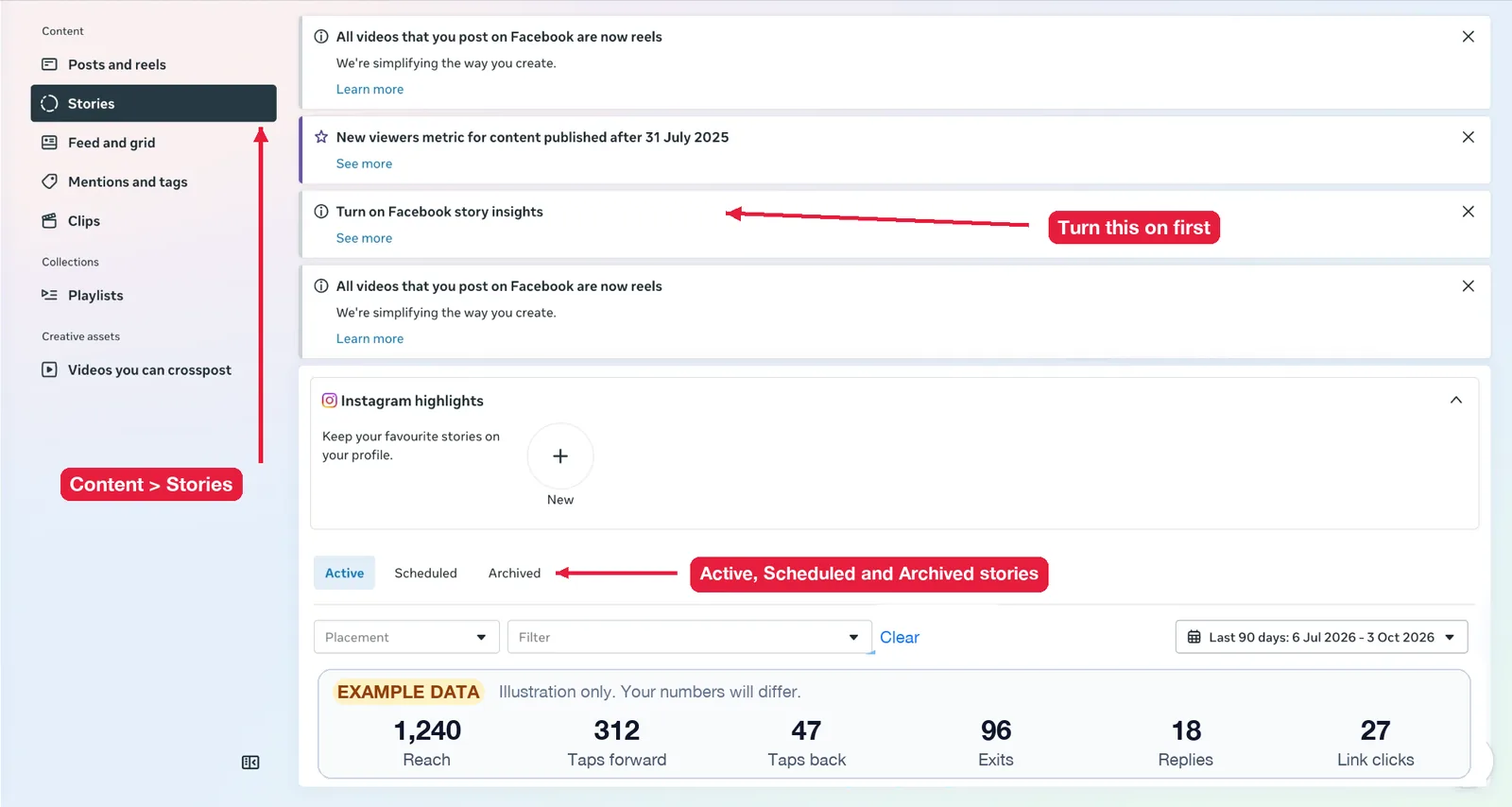
Track these 6 metrics in Meta Business Suite insights, and look at them weekly:
| Metric | What it means | What to do with it |
|---|---|---|
| Reach | How many accounts saw your story | Grow it with consistent posting times |
| Taps forward | People skipped to the next card | Fix the card they skipped |
| Taps back | People rewatched a card | Make more content like that card |
| Exits | People left your stories | Cut the card before the exit |
| Replies | People messaged you from the story | Your best sign of interest |
| Link clicks or sticker taps | People acted on your call to action | Compare against your goal |
You find these numbers in Meta Business Suite under Content, then Stories. If you see a note that says Turn on Facebook story insights, turn it on first. Stories you posted before that won’t have any numbers.
Don’t judge a single story. Look at averages over 2 weeks.
How do stories fit with the rest of your Facebook plan?
Stories keep your current followers close. Reels, ads and your Feed posts do other jobs, so plan them together.
Stories or Reels?
Use stories for people who already follow you and Reels to reach new people. Reels get recommended to strangers, and stories mostly don’t. Here’s the full comparison of Facebook Stories vs Reels.
When should you pay to promote stories?
Pay to promote stories when an organic story already works, like a poll with lots of replies or an offer that sold. Running that format as one of your Facebook story ads is safer than testing a brand new idea with money.
How do you keep stories recognizable?
Use the same 2 fonts, the same colors and the same layout every time. Build one template at the right Facebook story size and reuse it.
Should business stories have music?
Yes, when the sound fits the brand. Stories with sound feel more alive than silent ones. Pages get a smaller music library than personal profiles, so check what’s available before you plan around a song. Here’s how to add music to a Facebook story and what to do when the option is missing.
Are Facebook stories worth it for a small business?
Yes. Stories cost nothing, take minutes to make, and sit at the top of the Feed where your followers look first. Start with 3 days a week for a month, then check your replies and reach before you decide.